"What have we done?": The Paying Guests

Sarah Waters in the Divinity School at the Bodleian Library, Oxford, in 2014. Image source: The Independent
As regular readers are aware, the novelist Sarah Waters is an E&I favorite. I've written before about her novels Fingersmith (2002) and Affinity (1999), and the television adaptations of her 1998 novel Tipping the Velvet (BBC, 2002) and Fingersmith (BBC, 2005).
Waters' novels can evoke not only specific historical periods, but particular novelists. Fingersmith alludes to Charles Dickens, Wilkie Collins, and Mary Elizabeth Braddon, while Affinity suggests Henry James' Turn of the Screw (1898).
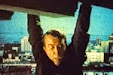
The Paying Guests (2014), set in the early 1920s, reminded me of Patricia Highsmith's novels and Alfred Hitchcock's films. Like Highsmith, Waters does not stint on gruesome details; and as in Hitchcock, feelings of guilt consume the characters. Of course, that means they have something to feel guilty about. . .

Cover of The Paying Guests by Sarah Waters. Image source: Just Well Mixed
Frances Wray lost her two brothers in the Great War; her father also died a few years ago, leaving nothing to provide for Frances and her mother but the South London house in which they live. Frances is approaching 30, and is unmarried. She and her mother are just scraping by. Because they can't afford a maid, unlike their neighbors, Frances' life is a dreary round of cooking and cleaning in the days before vacuum cleaners or automated washing machines. She has just a few pleasures: her nightly cigarette, once a week going "up to Town" with her mother to have tea and see a movie, and occasional visits to her former lover Christina and Christina's new partner. The rest is an endless round of drudgery.
Waters is very good at evoking the domestic privations in a household barely able to cling to middle-class respectability. To take a bath requires going into the scullery off the kitchen where the tub is located, feeding shillings into the gas meter, and lighting the flame of the 50-year-old Vulcan geyser, "which was probably the top of the manufacturer's range in about 1870, but now looked like the sort of vessel in which someone in a Jules Verne novel might make a trip to the moon." But the geyser is "too expensive to light often"; Frances and her mother usually economize instead by using the (no doubt rusty) water from the boiler attached to their cast-iron stove. "They bathed, at most, once a week, frequently taking turns with the same bathwater" (pp. 27-28).
To make ends meet they take a young couple into their home as lodgers, the "paying guests" of the title: Leonard and Lilian Barber. The couple seems to embody the postwar freedoms that Frances has forsworn. They are also emotionally volatile and have tempestuous arguments. Frances is an unwilling eavesdropper on their fights, and also on their make-up sex (Frances sleeps in a second-floor bedroom across the landing from theirs). There's a seaminess to Len, who touches Frances without her invitation, and one night plies the two women with gin to inveigle them into a game of strip Snakes and Ladders. The game doesn't get very far and ends in drunken acrimony.
Spending the days at home together, Frances and Lilian are drawn to one another in sympathetic friendship. They begin to share confidences: Frances confesses to Lilian about her previous relationship with Christina, and Lilian tells Frances about the miscarriage that ended the pregnancy that brought about her marriage. As they grow closer, Lilian begins to bring Frances out of her confining routine: she gives Frances a more modern haircut, the women have a picnic in the park, and she takes her to a family party. Returning home after the party, with both Frances' mother and Lilian's husband in the house, an impulsive embrace and fervent kiss turns into furtive and near-silent lovemaking in the dark scullery.
When Lilian began to tense, the tension communicated itself to her, a muscular charge passing between them. And when Lilian cried out, their mouths were tight together; Frances took in the cry like a breath, and it became her own.
Aside from that they made no sound, did nothing to unsettle the silence of the house; Frances was certain of it. . .Finally they eased themselves apart, Lilian going weakly to the bath-tub, sitting down on the edge of it, pulling up the satin wrapper that had slipped from her shoulders.
'Oh, Frances,' she said, as Frances joined her. . .She was trembling. 'What have we done? We must be mad. We must be drunk. Are we drunk?'
'We aren't drunk,' said Frances. She was trembling too.
'What have we done?'
'You know what we've done. You know what it is. Don't you?'
She saw the curving gleams of wetness at Lilian's eyes and mouth. She saw her nod, heard her whisper. 'Yes.'
'I'm in love with you. I've fallen in love with you.'
'Yes.'
That was all they said.
But as they sit together silently in the scullery, Lilian puts her hand down on the tub cover, "and there was the muted tap of her wedding-band, a small, chill sound in the darkness" (p. 214). The sound is a foreboding reminder of Lilian's matrimonial bonds, which threaten to keep them apart.
After the first section of the slow deepening of the intimacy between the two women, The Paying Guests suddenly accelerates into a tense crime drama and a highly suspenseful police investigation and trial. This is where the comparisons to Highsmith and Hitchcock come in, and they are fully justified by Waters' descriptive vividness and psychological insight. Readers are forewarned, however, that she does not shy away from the graphic depiction of bodies, whether in the portrayal of the women's passionate encounters or the grisly details of the crime and its aftermath.
The Paying Guests was Waters' sixth novel in 16 years, and she has not published another in the dozen years since. She was 48 when The Paying Guests came out, and will turn 60 in July. Of course, I have no idea what health or other issues she and her long-term partner have faced over the past decade, or whether she simply feels that she's said what she had to say. Waters seems young to retire from writing: Philip Roth published his final novel at 77, Vladimir Nabokov at 75, and Patricia Highsmith at 74. But if The Paying Guests turns out to be Waters' final novel—we certainly hope not—it's a compelling one.




No comments :
Post a Comment