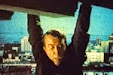
Guillermo Resto (Aeneas) and Mark Morris (Dido) in the Mark Morris Dance Group's Dido and Aeneas.
It's remarkable that we have so little information about the greatest opera in English,
Henry Purcell's Dido and Aeneas. The scores that exist are neither complete nor original; instead, they are partial copies that don't agree with one another, made for performances that occurred decades after Purcell's death in 1695. There is only a single surviving copy of Nahum Tate's libretto from the first (or at least a very early) performance. It does not indicate who sang the roles, or even the title of the opera, and it includes sections for which the music has been lost. We are fortunate indeed that enough of the work remains to enable staged performances.
Many questions and controversies remain. As musicologist Ellen Harris has written about
Dido, "we know even less than we did [30 years ago], or at least less than we had
imagined. We can no longer say with certainty in what year the opera was
written, where it had its premiere, who performed it or even what the
original score contained — the very things that normally provide the
foundation for our understanding of a piece of music." [1]
But evidence uncovered relatively recently and discussed in Harris's
Henry Purcell's Dido and Aeneas (Second edition, Oxford, 2018), has, in my view, helped to partly clarify rather than further confuse our understanding of Dido's origins. To take Harris's questions in a slightly different order:
Where was the opera first performed?
The one surviving 17th-century libretto for
Dido is for "An Opera Perform'd at Mr. Josias Priest's Boarding-School at
Chelsey By Young Gentlewomen."
The first page of the libretto of Dido and Aeneas printed for the Chelsea school performance (detail).
Original from the collection of the Royal College of Music.
In 1684 the young gentlewomen at Priest's school had performed
John Blow and Anne Kingsmill's Venus and Adonis, the work that clearly provided a model for
Dido. It is known that
Venus and Adonis was first performed at court, probably in 1683; a libretto from the Chelsea school performance of
Venus and Adonis states that it is "An Opera Perform'd before the King. Afterwards at Mr. Josias Priest's Boarding School at Chelsey By Young Gentlewomen."
The first page of the libretto of Venus and Adonis printed for the Chelsea school performance (detail).
Original from the collection of the Cambridge University Library.
This has led some scholars to speculate, despite a lack of direct evidence, that
Dido may also have been first performed at court. A major issue with this idea is that the libretto for
Dido says nothing about a court performance; its title page merely designates it "An Opera." Surely if
Dido had been first performed at court the libretto would have trumpeted the fact, as the
Venus libretto does.
There is one circumstance under which the Chelsea school libretto would have been silent about a previous court performance: if that court performance had occurred while James II was king, but the libretto was printed after he had been deposed in the Glorious Revolution of December 1688. That possibility has been virtually ruled out by recent developments, as we'll see in a moment. So it's most likely that no court performance ever took place, and that the performance at Priest's school was the opera's first.
Who performed the opera?
The libretto states that the opera was performed "by young gentlewomen."
Dido and Aeneas, of course, is the tragic love story of Queen Dido of Carthage and Aeneas, the heroic Trojan warrior. Some scholars, perhaps perplexed or offended by the thought of a young woman portraying Aeneas, have suggested that a male singer must have been brought in to sing the role.
However, when the tragic love story
Venus and Adonis was performed at Priest's school in 1684 the young gentlewomen took all the parts; a note on the libretto mentions that "Mr. Priest's Daughter acted Adonis."
John Verney's inscription on the libretto for Venus and Adonis.
So we have contemporary evidence that operas at Priest's school were performed by all-female casts, and no evidence to the contrary. It seems reasonable to assume that a similar practice was followed in staging
Dido and Aeneas, and that Aeneas and the other male roles in the opera were sung by young women.
How was the opera performed?
The version of
Dido that was performed at Priest's school was probably half again as long as the version that is generally performed today. The libretto for that performance includes a mythological prologue in two scenes in which Phoebus (Apollo), the sun-god, and Venus, the love-goddess, are honored and the arrival of spring is celebrated.
The prologue was clearly accompanied by music; it includes choruses and dances for Tritons, Nereids, Nymphs, shepherds and shepherdesses. [2] And most likely the prologue was preceded by its own overture. Unfortunately the music for both the prologue and its overture has been lost, as well as that for some of the dances that are indicated during the course of the opera.
After the opera a poem was recited aloud. Thomas D'Urfey's
New Poems (1690) contains an "Epilogue to the Opera of DIDO and AENEAS, performed at Mr. Preist's Boarding-School at Chelsey; Spoken by the Lady Dorothy Burk." [3]
From Thomas D'Urfey's New Poems (1690), p. 82.
Original from the Henry E. Huntington Library and Art Gallery
The surviving music of
Dido takes less than an hour to perform; together, the first overture, the sung prologue, the missing dances and the spoken epilogue may have added another 25 minutes or so to the runtime.
When was the opera performed?
The texts of both the prologue and the epilogue have been parsed for clues to the likely date of their performance. The prologue, with its scene celebrating the arrival of spring, would seem to point to a performance in April or May. Of course, it's also possible that the celebration of spring could be allegorical, and celebrate a rebirth or renewal of another kind.
For those who read the prologue allegorically, it has been suggested that Phoebus and Venus represent the king and queen (but which king and queen?). Venus is described as "the New rising star of the Ocean" and Spring "Welcomes Venus to the shore." These references have been interpreted by some to indicate that Venus is meant to represent Mary II, who had returned across the English Channel from the Netherlands in January 1689 to join her husband William after her father, James II, had fled.
D'Urfey's epilogue includes the following lines:
Rome may allow strange Tricks to please her Sons,
But we are Protestants and English Nuns,
Like nimble Fawns, and Birds that bless the Spring
Unscar'd by turning Times we dance and sing. . . [4]
From Thomas D'Urfey's New Poems (1690), p. 83.
Original from the Henry E. Huntington Library and Art Gallery
"Rome" is generally a reference to Catholicism (James II had converted in the late 1660s). "Strange Tricks" may refer to the "warming-pan baby," the allegation that the son to whom the wife of James II, Maria of Modena, gave birth in June 1688 was not hers. According to this (almost certainly false) rumor, the warming-pan baby was a substitute infant smuggled into the birth chamber in a bed-warming pan after Maria's child was stillborn in order to insure that James could claim a Catholic heir. The arrival of that son excited fears in Parliament about the establishment of a Catholic dynasty on the British throne, and led to the secret invitation to William of Orange to invade and overthrow James. "Turning times" is thought by some to refer to the Glorious Revolution.
So based on these admittedly speculative readings of the prologue and epilogue, we have a tentative time frame for the performance of
Dido and Aeneas: spring 1689, probably after the coronation of William and Mary on April 11. The mystery is solved, no?
Well, no. There are two major problems with a date of spring 1689 for the first performance of
Dido. The first is that we don't know whether the libretto and the epilogue derive from the same performance; and the second is that we now know that
Dido was likely performed a year or more earlier.
The Letter from Aleppo
In 2009 scholar Bryan White made a stunning archival discovery. While investigating the letters sent home from Aleppo by a music-loving English silk merchant, Rowland Sherman, White came across this passage in a letter dated February 1689 (new style; 1688 old style, when the new year was celebrated March 25):
If Harry has sett to the Harpsechord the Symph[ony] of the mask he made for Preists Ball, I should be very glad of a copie of it. There's another Symph[ony] in the same mask I think in C♭, in the 2d p[ar]t is a very neat point th[a]t moves all in quavers [eighth notes]. if he's applyed th[a]t to the harpsechord, 'twould be very acceptabl[e] too. [5]
"The mask he made for Preists Ball." Assuming that "Harry" is Henry Purcell, an acquaintance of Sherman, there is only one known dramatic entertainment he composed for Priest's school:
Dido and Aeneas. If "the Symphony of the mask" refers to the overture to the prologue, then "another Symphony" may refer to the overture played before Act I of the opera. Fortunately, that overture has survived. It is in the key of C minor (C♭), and has two parts; in the second part the upper strings play chasing runs of eighth notes. In the performance that follows by the Amsterdam Bach Soloists conducted by Jan Willem De Vriend, the second part of the overture begins about 50 seconds in:
So Sherman must have been familiar with the score of
Dido and Aeneas before he sailed to Aleppo. It was a journey that took almost three months, and Sherman arrived at the bay of Scandroon (Iskenderun) in late October 1688. White has determined that Sherman must have sailed from London no later than the end of July, 1688.
If
Dido was made for Priest's school, there was no court performance. And if the score was written before July 1688 it seems unlikely that it wasn't performed until a full year later. In the allegorical prologue, Phoebus and Venus could as easily refer to James II and Maria of Modena as to William and Mary. So on the evidence of Sherman's letter it seems that the first performance of the opera was in spring 1688 or earlier.
But what about D'Urfey's epilogue published in 1690 (or late 1689) with its references to "Rome," "strange tricks" and "turning times"? If the epilogue was performed in spring 1688 or earlier it obviously couldn't allude to the Glorious Revolution; if it wasn't performed until 1689, how can Sherman's familiarity with
Dido's score in 1688 be explained?
The Letters of John Verney
The letters of John Verney may shed some light on these questions. Verney was a silk merchant living in London; his wife's family lived in Little Chelsea, not far from Priest's school. Verney's niece Mary attended Priest's beginning in August 1683, when she was eight years old. John Verney wrote to his brother Edmund, Mary's father, who lived well outside London, about how Mary was doing at the school. Verney mentions Mary's performances in Priest's "Grande Balles"; from these references we know that balls were held on 17 April 1684 (when
Venus and Adonis was performed), 21 May 1685, 15 and 22 April 1686, and 1 December 1687.
Harris suggests that there may have been at least two performances of
Dido at Priest's school: one before July 1688, and one in 1689 (probably in the spring). For the date of the first performance both she and White choose 1 December 1687, the last documented school ball before Sherman's departure from England in July 1688. However, there are no letters from John to Edmund Verney between December 1687 and August 1688, and in any case Mary was probably withdrawn from Priest's school in February 1688 because of Edmund's difficulties in paying the fees. So if there was a ball in spring 1688 (as seems highly probable) it would not be documented in Verney's letters.
I am less convinced than Harris and White that
Dido was first performed in December 1687. For one thing, the prologue is full of spring imagery; for another, by the date of his letter in February 1689 would Sherman remember so vividly (and be so excited about receiving the music for) a piece that he had heard 14 months previously? It seems to me more likely that there was a school ball in spring 1688 at which
Dido was performed and where Sherman encountered the music.
And D'Urfey's epilogue certainly suggests that there was a performance in 1689 as well. Not only are there the cryptic references that may allude to the Glorious Revolution, but it is known that D'Urfey was employed as a singing-master at Priest's school in the summer of 1689, the most likely circumstance for him to supply a poem to be performed during a school ball. [6]
So: in my view the most probable scenario is a first performance in spring 1688, and a repeated performance with the addition of D'Urfey's epilogue in May or early June 1689. The mysteries of Dido and Aeneas are not quite solved; documentary evidence for both of these occasions is still lacking. But based on the evidence we do have, at least this sequence of events is plausible.
Aeneas and Dido (detail), by Pierre-Narcisse, Baron Guérin (1815)
Dido and Aeneas performed by young gentlewomen
As part of the 2018 Berkeley Festival and Exhibition of early music
Dido and Aeneas will be performed by the San Francisco Girls Chorus accompanied by the instrumental ensemble Voices of Music on June 7 and June 9; see the
Berkeley Festival website for details. The website states that "this concert is a recreation of what may have been heard" at Priest's school; since a male singer, Jesse Blumberg, will perform the role of Aeneas, that claim is doubtful. Nonetheless, I hope my San Francisco Bay Area readers will not miss the opportunity to hear this brilliant and moving work.
Update 22 December 2018: Harris'
Henry Purcell's Dido and Aeneas was selected for my
Favorites of 2018: Books. The BFX performance of
Dido and Aeneas by Mindy Ella Chu, Jesse Blumberg, the SF Girls Chorus and Voices of Music was included in my posts
Why we live in cities part 2: Exceptional musical performances and
Favorites of 2018: Live performances.
- Ellen Harris, "The More We Learn About ‘Dido and Aeneas,’ the Less We Know." New York Times, 15 December 2017. https://www.nytimes.com/2017/12/15/arts/music/dido-aeneas-purcell.html
- Nahum Tate. Dido and Aeneas: Prologue. http://home.olemiss.edu/~mudws/courses/dido.html
- Thomas D'Urfey, New Poems, 1690, pp. 82-83. https://quod.lib.umich.edu/e/eebo/A37001.0001.001/1:26?rgn=div1;view=fulltext
- D'Urfey, New Poems, p. 83. https://quod.lib.umich.edu/e/eebo/A37001.0001.001/1:26?rgn=div1;view=fulltext
- Bryan White. "Letter from Aleppo: dating the Chelsea School performance of Dido and Aeneas." Early Music, vol. 37 no. 3, 2009, pp. 417-428. https://doi.org/10.1093/em/cap041
- How D'Urfey wound up teaching at Priest's school is unknown. He was notorious for his bawdy songs and verse: New Poems includes "A True Tale of a True Intrigue," in which the poet describes being discovered in bed with two sisters; "A Dialogue between a Town Spark and his Miss," about what to do with their child born out of wedlock;
"Paid for Peeping: A Poem, Occasion'd by a Peeping hole into a Chamber
where a Beautiful and Virtuous young Lady Lodg'd, through which
undiscover'd, I could observe all her Actions"; and two lewd ditties
"set by Mr. Hen. Purcell" about husbands' difficulties in sexually
satisfying their wives. He is a curious choice as a singing
teacher for adolescent girls.